
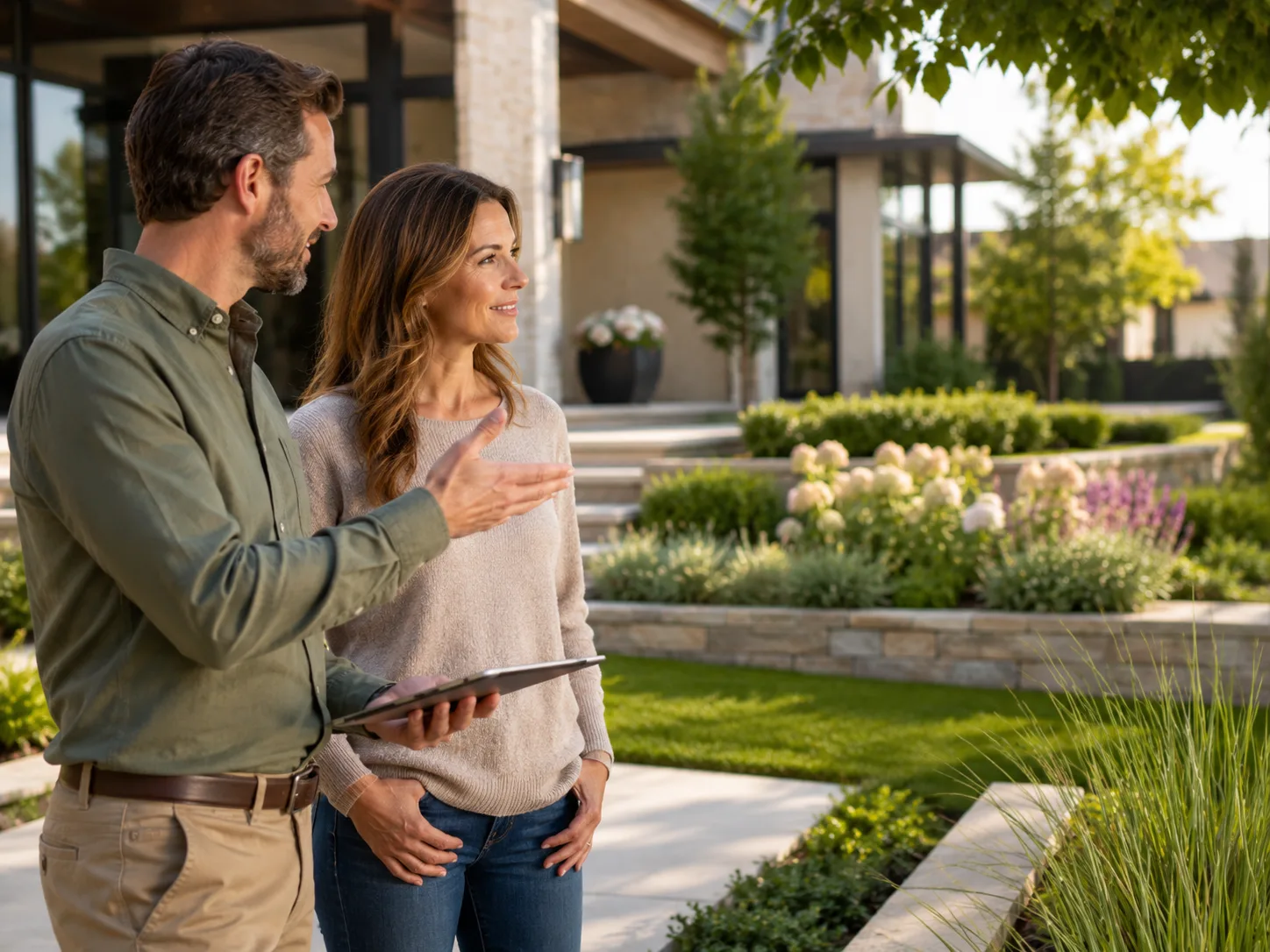
The Map Pack Becomes the First Shortlist
When a homeowner searches landscape design near me, patio contractor, outdoor kitchen builder, drainage contractor, or backyard renovation, they are often looking for someone close enough to understand the market and credible enough to trust on their property.
The map pack compresses that decision into a few visible choices. If your profile doesn't show the right proof, the homeowner may never make it to your website.
Photos Need to Show Real Local Work
Outdoor living and landscaping photos should show more than beauty shots. Include full-yard context, before-and-after views, drainage solutions, lighting, patios, plantings, retaining walls, outdoor kitchens, and projects in recognizable local settings.
The buyer wants to know whether you can solve a property like theirs, not whether you can upload attractive images.
Reviews Should Mention the Work That Matters
A review that says great company is useful. A review that mentions drainage, design, communication, patio quality, plant selection, lighting, cleanup, or a finished backyard that hosts better is stronger.
Ask for reviews when the homeowner can still name the specific problem you solved. Those details help future buyers and local search systems understand what you actually do.
Service Clarity Helps the Right Searches
A design-build outdoor living company should not look like a maintenance-only landscaper online. Make services clear: landscape design, patios, outdoor kitchens, lighting, drainage, retaining walls, planting, fire features, and full backyard transformations.
If the profile, website, and reviews send mixed signals, Google and homeowners both have a harder time knowing when to trust you.
Neighborhood Patterns Should Feed the System
Track which leads come from the same zip code, subdivision, or street as recent projects. Outdoor living work often creates demand nearby because neighbors share conditions and see the finished result.
That pattern should shape project pages, direct mail, review asks, and where you invest in local visibility next.
Make Local Trust Easy to See
Winning on Google Maps isn't only a ranking task. It's a trust task. The profile has to prove nearby relevance before the homeowner keeps comparing.
If your best outdoor living work isn't showing up clearly in local search, book an intro call. We will look at your profile, project proof, reviews, website path, and source tracking.